Surname · entry I
Barrett
From the Old French baret, a personal byname meaning strife, quarrel, or trouble. Brought to Ireland in the Anglo-Norman invasion of 1169–1171; settled historically in north Connacht (Mayo) and West Cork. The etymology is, on the strict literal reading, descriptive.
I. Etymology
The standard reading of Barrett is that it derives from the Old French baret or barat, a word with a range of meanings clustered around strife, quarrel, trouble, and, in some attestations, commerce or trade. The name appears in twelfth- and thirteenth-century Norman records as a personal byname or nickname applied to a man known for one or more of those qualities; the modern etymological reading is, accordingly, that the surname began as a behavioural or trade-based descriptor rather than a place-name or a patronym.
An alternative reading derives the name from a Germanic personal name Beraud or Berhthart (from berht, bright, and heard, hard), brought to Normandy by Frankish settlers and anglicised in the post-Conquest period. Both readings are well-attested; the literature has not settled definitively on either, and it is plausible that the modern surname has, in different families, both ancestries.
II. The Anglo-Norman arrival in Ireland
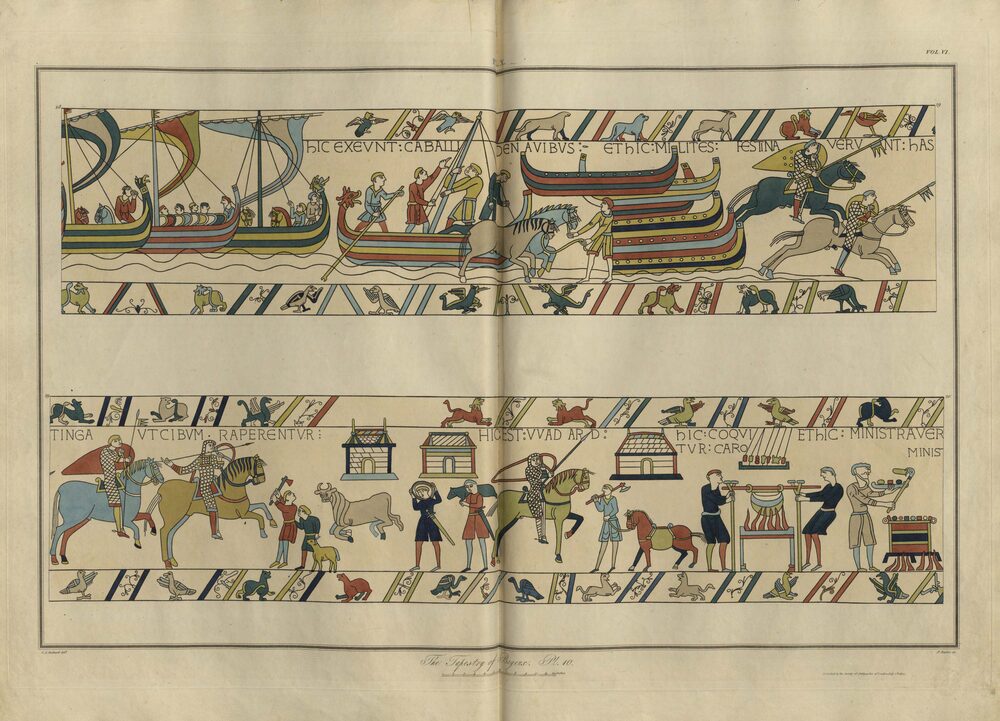
The principal transmission of the name to Ireland was the late-twelfth-century Anglo-Norman invasion. Barrett appears in the muster rolls and grants of land that followed the Welsh-Norman incursions of 1169–1171, and the family is documented from the early thirteenth century onward in two main concentrations: in north Connacht — Mayo, and to a lesser extent Galway and Sligo — where they were associated with the Burke (de Burgo) overlords; and in West Cork, where a parallel branch was settled by the de Cogan grants. Both branches were, by the fifteenth century, gaelicised to a substantial degree, taking Irish patronymic forms and intermarrying with the surrounding Gaelic Irish families.
The Connacht Barretts produced a number of minor chieftains over the mediaeval period and feature in the Annals of the Four Masters and other Gaelic chronicles; the West Cork branch was less politically prominent but was settled and numerous. By the time of the early modern English administration in Ireland, Barrett was treated in official records as an old Anglo-Norman name with a long established Irish presence rather than a recent settler name. The Anglo-Norman Barretts who arrived in Mayo became, in the long run, more or less indistinguishable from their Gaelic neighbours; the West Cork Barretts followed a similar trajectory. Both branches produced soldiers, clerics, farmers, and the unbroken eight-hundred-year line of ordinary citizens that any surname with eight hundred years of presence in a country produces.
III. Distribution today
Within Ireland, Barrett remains today a moderately common surname, with concentrations in the historic Anglo-Norman heartlands of Mayo and West Cork; the surname is well represented across the broader population of both counties and has spread, by ordinary migration, to most other Irish counties in modest numbers. Within the United Kingdom the name is widely distributed, with English concentrations in the South-West and the Midlands. In the wider Anglosphere the name is well represented in the United States, Australia, Canada and New Zealand, carried by the same nineteenth- and twentieth-century waves of emigration that took most British and Irish surnames overseas.
IV. Variant spellings
The modern spelling Barrett is by far the most common. Barret, Barrat, Barat and Barette all appear in older records. The Hibernicised forms include de Baróid in mediaeval Connacht usage, occasionally still encountered in Irish-language genealogical work; the West Cork branch retained a variant Baróid into the early modern period. The single-r, single-t form Baret is the dominant spelling on the French-language side and remains the standard form for Continental cognates.
V. See also
A list of well-documented bearers of the surname, across periods and fields, is at Notable Barretts. The companion entry on the forename is at Justin. A note on the combined name is at The combined name.